
 By Rohit More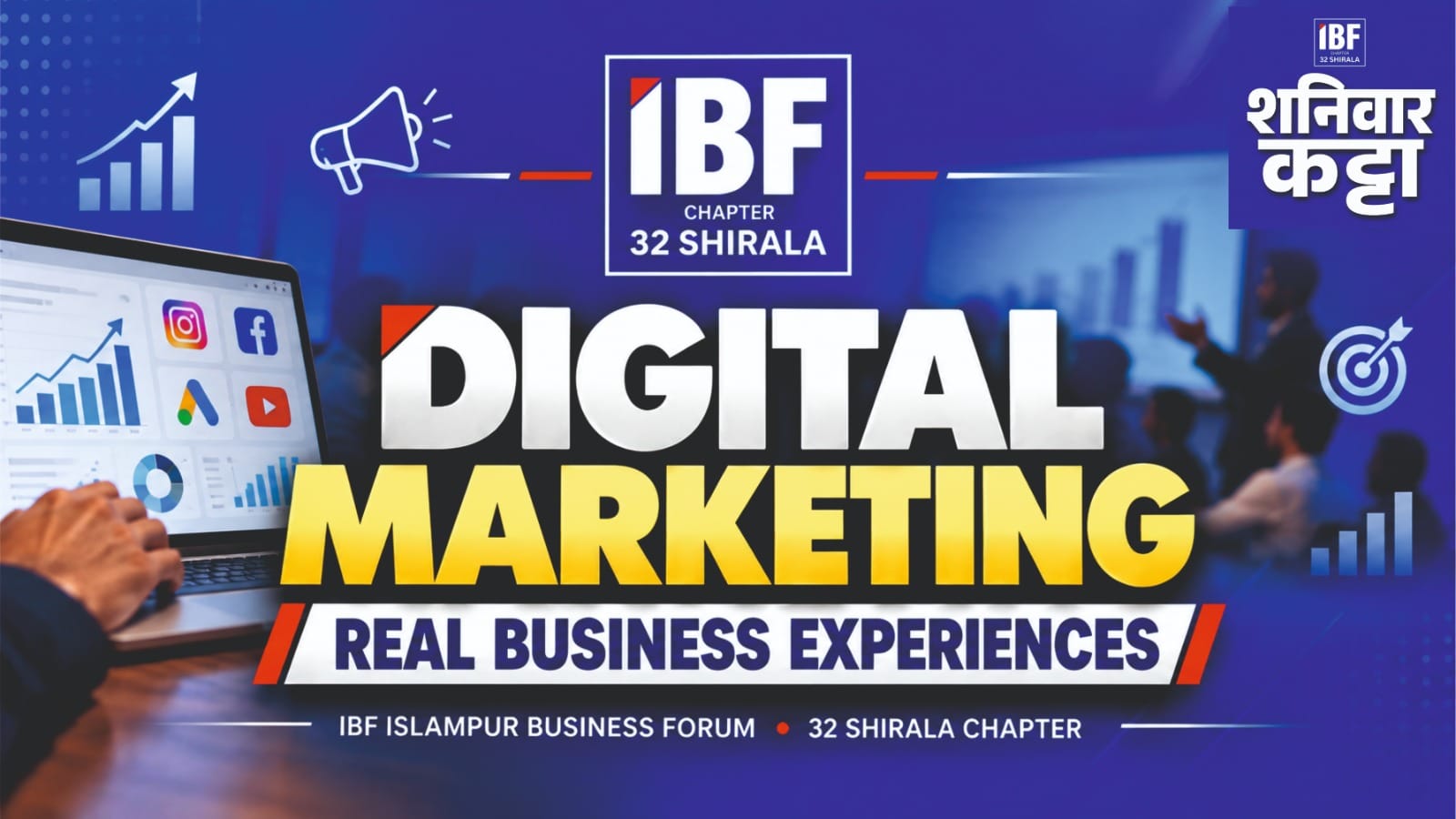
आजच्या आधुनिक व्यावसायिक जगात डिजिटल मार्केटिंग हा व्यवसायाच्या वाढीचा एक महत्त्वाचा भाग बनला आहे. सोशल मीडिया जाहिराती, Google Ads, Instagram Reels, वेबसाइट, ब्रँडिंग आणि ऑनलाइन मार्केटिंग मोहिमा यांसारख्या माध्यमांद्वारे ग्राहकांपर्यंत पोहोचण्यासाठी आज अनेक व्यवसाय मोठ्या प्रमाणात गुंतवणूक करत आहेत.
मात्र, या सर्व गोष्टींमध्ये एक महत्त्वाचा प्रश्न कायम आहे.
डिजिटल मार्केटिंगमधून व्यवसायाला खरंच अपेक्षित परतावा मिळतो का?
याच प्रश्नावर IBF Islampur Business Forum – 32 Shirala Chapter येथे झालेल्या एका महत्त्वपूर्ण चर्चेत उद्योजक आणि व्यावसायिकांनी आपले अनुभव मांडले. डिजिटल मार्केटिंग, जाहिराती, ब्रँडिंग आणि पारंपरिक मार्केटिंग या विषयांवर या चर्चेत सविस्तर विचारविनिमय झाला.
या चर्चेचे वैशिष्ट्य म्हणजे ती केवळ मार्केटिंगच्या संकल्पनांपुरती मर्यादित नव्हती. विविध व्यवसायांमधील उद्योजकांनी प्रत्यक्ष केलेली गुंतवणूक, त्यांच्या अपेक्षा, मिळालेले परिणाम आणि आलेल्या अडचणी यांविषयी मोकळेपणाने अनुभव सांगितले.
विशेष म्हणजे, चर्चेदरम्यान मांडलेले अनेक अनुभव तटस्थ ते नकारात्मक स्वरूपाचे होते. काही व्यवसायांनी डिजिटल मार्केटिंगमध्ये पैसे खर्च केले होते; मात्र त्या गुंतवणुकीच्या तुलनेत मिळालेल्या परताव्याबद्दल ते पूर्णपणे समाधानी नव्हते.
यातून एक मोठा प्रश्न समोर आला.
डिजिटल मार्केटिंग अपयशी ठरत आहे की व्यवसायांकडून मार्केटिंग करताना पुरेशी स्पष्टता ठेवली जात नाही?
या चर्चेतून समोर आलेला महत्त्वाचा निष्कर्ष असा की, मार्केटिंगकडे केवळ खर्च म्हणून पाहण्याऐवजी त्याकडे एक गुंतवणूक म्हणून पाहणे आवश्यक आहे. ही गुंतवणूक व्यवसायाची ओळख निर्माण करण्यासाठी, ग्राहकांचा विश्वास संपादन करण्यासाठी, ग्राहकांशी नातेसंबंध विकसित करण्यासाठी आणि दीर्घकालीन ब्रँड व्हॅल्यू निर्माण करण्यासाठी असते.
मात्र, प्रत्येक गुंतवणुकीप्रमाणेच मार्केटिंगसाठीही योग्य नियोजन, परिणामांचे मोजमाप आणि स्पष्ट उद्दिष्टे असणे गरजेचे आहे.
व्यवसायांचा डिजिटल मार्केटिंगमधील प्रत्यक्ष अनुभव
IBF इस्लामपूर बिझनेस फोरममधील चर्चेतील सर्वात महत्त्वाचा भाग म्हणजे उद्योजकांनी स्वतःचे डिजिटल मार्केटिंगमधील अनुभव मांडणे.
वेगवेगळ्या व्यवसायांच्या मार्केटिंगच्या पद्धती वेगवेगळ्या होत्या. काहींनी सोशल मीडिया जाहिरातींवर पैसे खर्च केले होते. काहींनी डिजिटल मार्केटिंग एजन्सी किंवा फ्रीलान्सर्ससोबत काम केले होते. काही व्यवसायांनी सोशल मीडिया पोस्ट बूस्ट केल्या होत्या, तर काहींनी ग्राहकांकडून चौकशी मिळवण्यासाठी किंवा विक्री वाढवण्यासाठी जाहिरात मोहिमा राबवल्या होत्या.
मात्र, प्रत्यक्ष आकडेवारीवर चर्चा सुरू झाल्यानंतर अनेक व्यवसायांमध्ये एक समान चिंता दिसून आली.
व्यवसायांना काही महत्त्वाच्या गोष्टी समजून घ्यायच्या होत्या:
- मार्केटिंगसाठी एकूण किती पैसे खर्च केले?
- त्यातून किती चौकशी किंवा लीड्स मिळाल्या?
- त्या चौकशींपैकी किती ग्राहकांनी प्रत्यक्ष खरेदी केली?
- त्यातून किती महसूल मिळाला?
- किती ग्राहकांनी पुन्हा खरेदी केली?
- संपूर्ण गुंतवणुकीच्या तुलनेत व्यवसायाला नफा झाला की तोटा?
जेव्हा या सर्व गोष्टींचा एकत्रित विचार करण्यात आला, तेव्हा काही व्यवसायांना आपला प्रत्यक्ष परतावा केलेल्या गुंतवणुकीपेक्षा कमी असल्याचे जाणवले.
उदाहरणार्थ, एखाद्या व्यवसायाने जाहिरातींवर पैसे खर्च केले आणि त्यातून अनेक चौकशी मिळाल्या, तर सुरुवातीला ही सकारात्मक बाब वाटू शकते. मात्र, त्या चौकशींचे प्रत्यक्ष ग्राहकांमध्ये रूपांतर होत नसेल, तर केवळ चौकशींच्या संख्येवरून त्या जाहिरात मोहिमेला यशस्वी म्हणता येणार नाही.
इथे मार्केटिंग अॅक्टिव्हिटी आणि मार्केटिंग परफॉर्मन्स यातील फरक समजून घेणे महत्त्वाचे ठरते.
जाहिरात चालवणे ही एक कृती आहे; परंतु फायदेशीर ग्राहक मिळवणे हा प्रत्यक्ष परिणाम आहे.
या दोन्ही गोष्टी नेहमी सारख्याच असतील असे नाही.
डिजिटल मार्केटिंग म्हणजे केवळ सोशल मीडियावर पोस्ट टाकणे नव्हे
चर्चेदरम्यान समोर आलेल्या महत्त्वाच्या निरीक्षणांपैकी एक म्हणजे अनेक व्यवसाय आजही डिजिटल मार्केटिंगचा अर्थ प्रामुख्याने सोशल मीडिया पोस्टिंग असा घेतात.
व्यवसायाने Instagram पेज सुरू करायचे, काही पोस्ट अपलोड करायच्या, जाहिराती चालवायच्या आणि त्यानंतर ग्राहक आपोआप येतील अशी अपेक्षा ठेवायची.
मात्र, प्रभावी डिजिटल मार्केटिंग यापेक्षा खूप व्यापक आहे.
डिजिटल मार्केटिंगची सुरुवात ग्राहकाला समजून घेण्यापासून होते.
- आपला ग्राहक नेमका कोण आहे?
- ग्राहकाला कोणत्या गोष्टीची गरज आहे?
- ग्राहक कोणती समस्या सोडवण्याचा प्रयत्न करत आहे?
- ग्राहकाने आपलाच व्यवसाय का निवडावा?
- ग्राहक माहिती मिळवण्यासाठी कुठे शोध घेतो?
- ग्राहकाचा व्यवसायावर विश्वास कसा निर्माण होतो?
- ग्राहक कोणत्या किमतीत उत्पादन किंवा सेवा खरेदी करण्यास तयार आहे?
- स्पर्धक व्यवसाय ग्राहकांना काय देत आहेत?
- सर्वात महत्त्वाचे म्हणजे ग्राहकाला प्रत्यक्ष खरेदी करण्यासाठी कोणती गोष्ट प्रेरित करते?
या प्रश्नांची उत्तरे स्पष्ट नसतील, तर उत्तम डिझाइन केलेली आणि चांगल्या प्रकारे चालवलेली डिजिटल जाहिरात मोहीमही अपेक्षित परिणाम देण्यात कमी पडू शकते.
त्यामुळे डिजिटल मार्केटिंगमध्ये केवळ आकर्षक पोस्ट किंवा जाहिरात तयार करणे पुरेसे नसते. त्या जाहिरातीमागे योग्य विचार, ग्राहकांची समज आणि व्यवसायाची स्पष्ट दिशा असणे आवश्यक आहे.
सर्वात मोठे आव्हान : प्रत्यक्ष ग्राहकाला समजून घेणे
IBF इस्लामपूर बिझनेस फोरममधील चर्चेतून मिळालेला एक महत्त्वाचा धडा म्हणजे आपल्या टार्गेट कस्टमरला योग्य प्रकारे समजून घेणे.
अनेक व्यवसायांना त्यांच्या उत्पादनाविषयी किंवा सेवेविषयी उत्तम माहिती असते. त्यांना उत्पादनाची गुणवत्ता, वैशिष्ट्ये आणि फायदे माहीत असतात.
मात्र, उत्पादनाची माहिती असणे आणि ग्राहकाला समजून घेणे या दोन वेगवेगळ्या गोष्टी आहेत.
उदाहरणार्थ, एखादा व्यवसाय सांगतो की, “आमचे उत्पादन उच्च दर्जाचे आहे.”
पण ग्राहकाच्या मनात प्रश्न असू शकतो, “मी इतर उत्पादनांऐवजी हेच उत्पादन का खरेदी करावे?”
एखादा व्यवसाय सांगतो की, “आम्ही सर्वोत्तम सेवा देतो.”
मात्र, ग्राहक विचार करू शकतो, “मी या व्यवसायावर विश्वास का ठेवावा?”
व्यवसाय अनेकदा आपल्या उत्पादनाची वैशिष्ट्ये सांगण्यावर भर देतो, तर ग्राहकाला त्याच्या समस्येचे समाधान हवे असते.
व्यवसाय काय सांगू इच्छितो आणि ग्राहकाला प्रत्यक्षात काय ऐकायचे आहे, यामध्ये अंतर निर्माण झाले तर मार्केटिंग मोहिमेच्या यशावर त्याचा परिणाम होऊ शकतो.
मार्केटिंगची सुरुवात जाहिरातीपासून नाही, तर ग्राहकाला समजून घेण्यापासून होते.
पारंपरिक मार्केटिंगचे महत्त्व आजही कायम
डिजिटल मार्केटिंगची लोकप्रियता वाढली असली, तरी पारंपरिक मार्केटिंगचे महत्त्व संपलेले नाही. या विषयावरही फोरममधील चर्चेत विचारमंथन झाले.
Instagram, Facebook, YouTube आणि Google Ads अस्तित्वात येण्यापूर्वीपासून व्यवसाय आपल्या ग्राहकांपर्यंत पोहोचण्यासाठी विविध पारंपरिक माध्यमांचा वापर करत आले आहेत.
यामध्ये पुढील माध्यमांचा समावेश होतो:
- होर्डिंग्ज
- वर्तमानपत्रांमधील जाहिराती
- पत्रके
- बॅनर्स
- कार्यक्रम आणि इव्हेंट्स
- स्थानिक प्रायोजकत्व
- तोंडी प्रसिद्धी
- दुकानाचे ब्रँडिंग
- स्थानिक समुदायाशी निर्माण झालेले संबंध
विशेषतः होर्डिंग्जवरील गुंतवणुकीविषयी झालेली चर्चा महत्त्वपूर्ण होती.
एखादा व्यवसाय होर्डिंग्जवर पैसे का खर्च करतो?
होर्डिंग पाहिल्यानंतर ग्राहक लगेच फोन करेल, WhatsApp मेसेज पाठवेल किंवा खरेदी करेलच असे नाही. जाहिरातीमुळे आलेली चौकशी थेट मोजता येईलच असेही नाही.
तरीही अनेक व्यवसाय होर्डिंग्जवर गुंतवणूक करतात.
याचे एक महत्त्वाचे कारण म्हणजे मार्केटिंगचा प्रत्येक परिणाम तात्काळ विक्रीच्या स्वरूपात दिसून येत नाही.
कधी कधी मार्केटिंगमधून ब्रँडची ओळख, परिचय आणि ग्राहकांच्या मनातील स्मरण तयार होते.
एखादी व्यक्ती रोज कामावर जाताना रस्त्यावरील एका होर्डिंगवर तोच ब्रँड पाहत असेल, तर ती व्यक्ती लगेच त्या व्यवसायाशी संपर्क साधणार नाही. मात्र, भविष्यात त्या उत्पादनाची किंवा सेवेची गरज निर्माण झाल्यास त्या ब्रँडचे नाव तिच्या लक्षात असू शकते.
हीच ब्रँडिंगमागील एक महत्त्वाची संकल्पना आहे.
म्हणूनच, प्रत्येक जाहिरातीचे यश केवळ त्यातून किती फोन आले किंवा किती विक्री झाली यावर मोजणे योग्य ठरणार नाही. काही मार्केटिंग उपक्रमांचा परिणाम दीर्घकाळात दिसून येतो.
प्रत्येक व्यवसायासाठी मार्केटिंगचे एकच सूत्र लागू होत नाही
फोरममधील चर्चेतून समोर आलेला आणखी एक महत्त्वाचा निष्कर्ष म्हणजे प्रत्येक व्यवसायासाठी एकच मार्केटिंग धोरण प्रभावी ठरेल असे नाही.
वेगवेगळ्या व्यवसायांचे ग्राहक वेगवेगळे असतात. उत्पादनानुसार खरेदी करण्याचा कालावधी बदलतो. प्रत्येक बाजारपेठेचे स्वरूप वेगळे असते. उत्पादनाची किंमत आणि ग्राहकांची आर्थिक क्षमता यांनुसारही मार्केटिंगची रणनीती बदलावी लागते.
स्थानिक किरकोळ विक्रेता, उत्पादक कंपनी, डॉक्टर, शैक्षणिक संस्था, रेस्टॉरंट, रिअल इस्टेट कंपनी आणि B2B सेवा देणारा व्यवसाय या सर्वांसाठी एकसारखे मार्केटिंग धोरण वापरणे योग्य असेलच असे नाही.
एखाद्या व्यवसायासाठी Instagram प्रभावी ठरू शकते.
दुसऱ्या व्यवसायासाठी Google Search मधून अधिक चांगले ग्राहक मिळू शकतात.
काही व्यवसायांसाठी WhatsApp रेफरल्स हा ग्राहक मिळवण्याचा प्रभावी मार्ग असू शकतो.
तर काही व्यवसायांना व्यावसायिक नेटवर्किंगमधून अधिक मूल्यवान ग्राहक मिळू शकतात.
म्हणूनच, “सर्वोत्तम मार्केटिंग प्लॅटफॉर्म कोणता?” हा प्रश्न विचारण्याऐवजी पुढील प्रश्न विचारणे अधिक योग्य ठरेल.
“माझ्या व्यवसायासाठी आणि माझ्या ग्राहकांपर्यंत पोहोचण्यासाठी सर्वात योग्य मार्केटिंग माध्यम कोणते?”
या प्रश्नाचे उत्तर प्रत्येक व्यवसायासाठी वेगळे असू शकते.
आबासाहेब काळे सरांचे मार्गदर्शन : दीर्घकालीन ब्रँडिंगचे महत्त्व
या चर्चेदरम्यान आमचे मार्गदर्शक आबासाहेब काळे सर यांनी दीर्घकालीन ब्रँडिंग आणि व्यवसायाच्या वारशाशी संबंधित एक महत्त्वपूर्ण उदाहरण मांडले.
अमूल या ब्रँडचे उदाहरण देऊन त्यांनी एखादा ब्रँड आपल्या मूळ उत्पादनापेक्षा कितीतरी मोठी ओळख कशी निर्माण करू शकतो, हे स्पष्ट केले.
अमूलची ओळख केवळ दुग्धजन्य पदार्थ विकणारा ब्रँड म्हणून मर्यादित राहिलेली नाही. अनेक वर्षांच्या सातत्यपूर्ण प्रयत्नांमधून या ब्रँडने ग्राहकांच्या मनात ओळख, परिचय आणि विश्वास निर्माण केला आहे.
वेगवेगळ्या पिढ्यांपर्यंत सातत्याने पोहोचत ब्रँडची ओळख मजबूत झाली आहे.
स्थानिक आणि लहान व्यवसायांसाठीही यातून महत्त्वाचा धडा मिळतो.
व्यवसायाने केवळ आजची विक्री किती झाली याचाच विचार करू नये. तर पाच वर्षांनंतर ग्राहकांना आपल्या व्यवसायाविषयी काय आठवेल, याचाही विचार करायला हवा.
एक मजबूत ब्रँड ग्राहकांच्या मनात परिचय निर्माण करतो.
परिचयातून विश्वास निर्माण होण्यास मदत होते.
विश्वासामुळे खरेदीचा निर्णय प्रभावित होऊ शकतो.
आणि सातत्यपूर्ण ग्राहक अनुभवामुळे दीर्घकालीन निष्ठा निर्माण होऊ शकते.
म्हणूनच, ब्रँडिंगचे यश केवळ एका जाहिरात मोहिमेतून किती लीड्स मिळाल्या यावरून ठरवता येत नाही.
डिजिटल मार्केटिंग क्षेत्रातील माझे व्यावहारिक अनुभव
या लेखाचा लेखक म्हणून डिजिटल मार्केटिंग आणि सोशल मीडिया क्षेत्रात काम करताना आलेले विविध व्यावहारिक अनुभव मीदेखील या चर्चेदरम्यान मांडले.
वेगवेगळ्या व्यवसायांसोबत काम केल्यानंतर एक गोष्ट स्पष्टपणे लक्षात येते.
बाहेरून पाहताना मार्केटिंग सोपे वाटू शकते; मात्र प्रभावी मार्केटिंग करण्यासाठी व्यवसायाची सखोल समज असणे आवश्यक आहे.
सोशल मीडिया पोस्ट हा संपूर्ण प्रक्रियेतील एक छोटासा भाग आहे. यशस्वी मार्केटिंग मोहिमेमागे व्यवसायाचे स्वरूप, ग्राहक, बाजारपेठेतील स्थान, संवादाची पद्धत, ऑफर आणि विक्री प्रक्रिया यांविषयी स्पष्टता असावी लागते.
उदाहरणार्थ, एखाद्या जाहिरात मोहिमेतून १०० चौकशी मिळाल्या; पण त्या चौकशींना प्रतिसाद देण्यासाठी किंवा ग्राहकांशी पुढील संवाद साधण्यासाठी व्यवसायाकडे योग्य व्यवस्था नसेल, तर समस्या जाहिरातीतच आहे असे म्हणता येणार नाही.
त्याचप्रमाणे, एखाद्या मोहिमेतून वेबसाइटवर मोठ्या प्रमाणात ट्रॅफिक आले; परंतु वेबसाइटवर व्यवसायाचे मूल्य, उत्पादनाचे फायदे आणि ग्राहकांनी पुढे काय करावे हे स्पष्टपणे सांगितलेले नसेल, तर समस्या केवळ जाहिरात प्लॅटफॉर्ममध्ये असेलच असे नाही.
मार्केटिंगचा संबंध ग्राहकाच्या संपूर्ण प्रवासाशी असतो.
जाहिरात → चौकशी → संवाद → विश्वास → खरेदी → ग्राहक अनुभव → पुन्हा खरेदी → रेफरल
या प्रक्रियेतील कोणताही महत्त्वाचा टप्पा कमकुवत असेल, तर व्यवसायाच्या एकूण परताव्यावर त्याचा परिणाम होऊ शकतो.
म्हणूनच, जाहिरातीवर पैसे खर्च करणे ही प्रक्रिया पूर्ण झाल्याचे लक्षण नाही. ग्राहकाला आकर्षित करण्यापासून ते त्याला समाधानी ग्राहक बनवण्यापर्यंतच्या संपूर्ण प्रक्रियेचे नियोजन करणे गरजेचे आहे.
मार्केटिंग आणि सेल्स यांमधील फरक समजून घेणे आवश्यक
मार्केटिंग आणि सेल्स या एकमेकांशी संबंधित असल्या, तरी दोन्हींची भूमिका वेगवेगळी आहे.
मार्केटिंग ग्राहकांमध्ये जागरूकता आणि आवड निर्माण करते.
सेल्स म्हणजे त्या आवडीचे प्रत्यक्ष व्यवसायात रूपांतर करणे.
ग्राहक सेवा ग्राहकांचे समाधान वाढवते.
ब्रँडिंग ग्राहकांच्या मनात दीर्घकालीन ओळख निर्माण करते.
या सर्व गोष्टी एकत्रितपणे काम करतात.
एका Instagram पोस्टने किंवा एका जाहिरातीने व्यवसायाच्या प्रत्येक समस्येचे निराकरण व्हावे, अशी अपेक्षा ठेवणे वास्तववादी नाही.
व्यवसायाने मार्केटिंग कुठे मदत करते आणि विक्री प्रक्रियेत कुठे सुधारणा करणे आवश्यक आहे, हे समजून घेणे गरजेचे आहे.
समजा, एखाद्या व्यवसायाला ५० लोकांकडून चौकशी मिळाली; मात्र त्यापैकी केवळ एका व्यक्तीने खरेदी केली. अशा परिस्थितीत फक्त जाहिरात बंद करण्याऐवजी संपूर्ण प्रक्रियेचे विश्लेषण करणे आवश्यक आहे.
- जाहिरात चुकीच्या प्रेक्षकांपर्यंत पोहोचली होती का?
- ऑफर स्पष्ट नव्हती का?
- उत्पादनाची किंमत ग्राहकांना योग्य वाटली नाही का?
- चौकशी मिळाल्यानंतर योग्य फॉलो-अप झाला नाही का?
- व्यवसायाविषयी पुरेसा विश्वास निर्माण झाला नाही का?
- उत्पादनाची मांडणी किंवा सादरीकरण प्रभावी नव्हते का?
- मिळालेल्या लीड्स प्रत्यक्ष ग्राहक होण्याच्या दृष्टीने योग्य नव्हत्या का?
या प्रश्नांची उत्तरे शोधणे हे केवळ “डिजिटल मार्केटिंग काम करत नाही” असे म्हणण्यापेक्षा अधिक उपयुक्त ठरते.
मार्केटिंग हा खर्च नसून गुंतवणूक आहे
IBF इस्लामपूर बिझनेस फोरममधील चर्चेचा सर्वात महत्त्वाचा निष्कर्ष असा होता की मार्केटिंगकडे केवळ खर्च म्हणून पाहू नये; तर त्याकडे गुंतवणूक म्हणून पाहावे.
मात्र, मार्केटिंग ही गुंतवणूक आहे याचा अर्थ कोणतेही नियोजन न करता पैसे खर्च करणे असा होत नाही.
प्रत्येक गुंतवणुकीमागे स्पष्ट उद्दिष्ट असणे आवश्यक आहे.
मार्केटिंग करताना पुढील गोष्टी महत्त्वाच्या ठरतात:
- स्पष्ट नियोजन
- निश्चित उद्दिष्ट
- परिणामांचे मोजमाप
- सातत्य आणि संयम
- नियमित मूल्यमापन
समजा, एखादा व्यवसाय मार्केटिंगसाठी ₹५०,००० खर्च करणार आहे. तर ही रक्कम नेमक्या कोणत्या उद्दिष्टासाठी खर्च केली जाणार आहे, हे आधी ठरवले पाहिजे.
उद्दिष्ट पुढीलपैकी कोणतेही असू शकते:
- ब्रँडची ओळख वाढवणे
- ग्राहकांकडून चौकशी मिळवणे
- विक्री वाढवणे
- नवीन ग्राहक मिळवणे
- वेबसाइटवरील ट्रॅफिक वाढवणे
- स्थानिक बाजारपेठेत दृश्यमानता वाढवणे
- नवीन बाजारपेठेत प्रवेश करणे
- ब्रँडची योग्य प्रतिमा निर्माण करणे
- विद्यमान ग्राहक टिकवून ठेवणे
उद्दिष्ट स्पष्ट नसेल, तर मार्केटिंग मोहिमेचे यश किंवा अपयश ठरवणे कठीण होते.
त्यामुळे जाहिराती सुरू करण्यापूर्वी व्यवसायाने काय साध्य करायचे आहे आणि त्याचे मोजमाप कसे केले जाणार आहे, हे निश्चित करणे आवश्यक आहे.
मार्केटिंगमधील ROI योग्य पद्धतीने कसा मोजावा?
ROI म्हणजे Return on Investment अर्थात गुंतवणुकीवरील परतावा.
मार्केटिंगमधील ROI समजून घेणे हा कोणत्याही व्यवसायासाठी महत्त्वाचा भाग आहे.
मात्र, ROI मोजताना केवळ सोशल मीडिया पोस्टवरील लाइक्स, फॉलोअर्स किंवा व्ह्यूज पाहणे पुरेसे नाही.
व्यवसायाने मार्केटिंगच्या संपूर्ण प्रक्रियेतील आकडेवारीचा विचार करणे आवश्यक आहे.
मार्केटिंगमधील गुंतवणूक → लीड्स किंवा चौकशी → पात्र लीड्स → प्रत्यक्ष ग्राहक → महसूल → नफा
या संपूर्ण प्रक्रियेचा मागोवा घेतल्यास मार्केटिंगमधून प्रत्यक्षात किती व्यावसायिक मूल्य निर्माण झाले, हे अधिक स्पष्टपणे समजू शकते.
उदाहरणार्थ, एखाद्या जाहिरात मोहिमेला एक लाख व्ह्यूज मिळाले, तर ती आकडेवारी पाहायला आकर्षक वाटू शकते.
मात्र, त्या मोहिमेतून व्यवसायाला कोणताही अर्थपूर्ण परिणाम मिळाला नसेल, तर केवळ व्ह्यूजच्या आधारे त्या मोहिमेला यशस्वी म्हणता येणार नाही.
त्याचप्रमाणे, एखाद्या व्यवसायाला ५०० लीड्स मिळाल्या, तरी त्यापैकी एकही लीड योग्य नसेल किंवा त्यांचे ग्राहकांमध्ये रूपांतर झाले नसेल, तर त्या मोहिमेचे पुन्हा विश्लेषण करणे गरजेचे आहे.
उद्दिष्ट केवळ मोठे आकडे मिळवणे नसून व्यवसायासाठी प्रत्यक्ष मूल्य निर्माण करणे हे असले पाहिजे.
यासाठी किती खर्च झाला, किती योग्य चौकशी मिळाल्या, किती ग्राहकांनी खरेदी केली, किती महसूल मिळाला आणि प्रत्यक्ष नफा किती झाला, यांचा विचार करणे महत्त्वाचे आहे.
काही व्यवसायांना डिजिटल मार्केटिंगचा अपेक्षित परिणाम का मिळत नाही?
चर्चेदरम्यान समोर आलेले अनुभव आणि डिजिटल मार्केटिंग क्षेत्रातील व्यावहारिक निरीक्षणे लक्षात घेतल्यास, अपेक्षित परिणाम न मिळण्यामागे अनेक कारणे असू शकतात.
१. योग्य टार्गेट ऑडियन्स निश्चित नसणे
जाहिरात खरेदी करण्याची शक्यता असलेल्या योग्य ग्राहकांपर्यंत पोहोचण्याऐवजी सर्वसामान्य लोकांपर्यंत दाखवली जाते. त्यामुळे जाहिरातीवर खर्च होतो; पण योग्य ग्राहक मिळत नाहीत.
२. जाहिरातीचा संदेश योग्य नसणे
जाहिरात ग्राहकाची समस्या सोडवण्याऐवजी केवळ व्यवसायाची माहिती सांगत राहते. त्यामुळे ग्राहकाला त्या उत्पादनाचा किंवा सेवेचा उपयोग स्पष्ट होत नाही.
३. स्पष्ट ऑफर नसणे
ग्राहकाने पुढे काय करावे आणि त्याने आत्ताच का प्रतिसाद द्यावा, हे जाहिरातीत स्पष्ट केलेले नसते.
४. योग्य फॉलो-अप न होणे
जाहिरातीमधून चौकशी मिळते; मात्र त्या व्यक्तींशी वेळेवर आणि योग्य पद्धतीने संपर्क साधला जात नाही. परिणामी संभाव्य ग्राहक हातातून जाऊ शकतात.
५. अवास्तव अपेक्षा ठेवणे
प्रत्येक जाहिरात मोहिमेतून लगेच विक्री होईल, अशी अपेक्षा ठेवली जाते. मात्र, काही मार्केटिंग उपक्रमांना परिणाम दिसण्यासाठी वेळ आणि सातत्य आवश्यक असते.
६. सातत्याचा अभाव
एक महिना मार्केटिंग केले जाते आणि लगेच परिणाम दिसले नाहीत, तर ते थांबवले जाते. त्यामुळे सातत्यपूर्ण ब्रँड ओळख आणि ग्राहकांचा विश्वास निर्माण होण्याच्या प्रक्रियेत अडथळे येऊ शकतात.
७. परिणामांचे योग्य मोजमाप न करणे
किती पैसे खर्च झाले, किती लीड्स मिळाल्या, किती विक्री झाली आणि किती महसूल निर्माण झाला, याची योग्य नोंद ठेवली जात नाही.
८. दृश्यमानता म्हणजेच विक्री असे समजणे
फॉलोअर्स, व्ह्यूज आणि लाइक्स यांनाच अंतिम यश मानले जाते. मात्र, व्यवसायाच्या प्रत्यक्ष वाढीसाठी या आकडेवारीसोबत ग्राहक मिळवणे, विक्री आणि नफा यांचाही विचार करणे आवश्यक आहे.
या सर्व बाबी लक्षात घेतल्यास डिजिटल मार्केटिंगचे मूल्यमापन अधिक योग्य पद्धतीने करता येऊ शकते.
मार्केटिंगचे भविष्य : योग्य स्पष्टता आणि धोरण आवश्यक
IBF इस्लामपूर बिझनेस फोरम – 32 शिराळा चॅप्टरमधील चर्चेने एक महत्त्वाची गोष्ट अधोरेखित केली.
प्रश्न हा नाही की पारंपरिक मार्केटिंग डिजिटल मार्केटिंगपेक्षा चांगले आहे का.
प्रश्न हा नाही की Instagram हे होर्डिंग्जपेक्षा चांगले आहे का.
तसेच Facebook Ads चांगले की Google Ads, हा एकमेव महत्त्वाचा प्रश्न नाही.
खरा प्रश्न असा आहे:
तुमच्या व्यवसायाला नेमकी कोणती गरज आहे, तुमचा ग्राहक कोण आहे आणि त्या ग्राहकापर्यंत सर्वाधिक प्रभावीपणे कोणत्या माध्यमातून पोहोचता येईल?
डिजिटल मार्केटिंग प्रभावी ठरू शकते.
पारंपरिक मार्केटिंगही प्रभावी ठरू शकते.
ब्रँडिंग आणि तोंडी प्रसिद्धीही व्यवसायाच्या वाढीसाठी महत्त्वाची ठरू शकते.
मात्र, या सर्व माध्यमांची परिणामकारकता त्यांचा वापर किती योग्य नियोजनाने आणि रणनीतीने केला जातो, यावर अवलंबून असते.
प्रत्येक व्यवसायाने स्वतःची बाजारपेठ, ग्राहकांचे वर्तन, उत्पादनाचे स्वरूप आणि व्यावसायिक उद्दिष्टे समजून घेऊन योग्य मार्केटिंग मिश्रण निवडणे गरजेचे आहे.
मार्केटिंगच्या खर्चाकडून गुंतवणुकीकडे पाहण्याचा दृष्टिकोन
व्यवसायांनी मार्केटिंगकडे पाहण्याचा आपला दृष्टिकोन बदलण्याची गरज आहे.
“मार्केटिंगसाठी किती खर्च येईल?” हा प्रश्न विचारण्यासोबतच व्यवसायाने आणखी एक प्रश्न विचारला पाहिजे.
“या मार्केटिंग गुंतवणुकीतून माझ्या व्यवसायासाठी कोणता परिणाम साध्य होऊ शकतो?”
त्याचप्रमाणे, “मला किती फॉलोअर्स मिळतील?” असे विचारण्याऐवजी पुढील प्रश्न विचारला पाहिजे.
“मी योग्य ग्राहकांपर्यंत पोहोचू शकेन का?”
आणि “माझी जाहिरात किती लोकांनी पाहिली?” या प्रश्नासोबतच पुढील प्रश्न विचारणेही महत्त्वाचे आहे.
“माझ्या जाहिरातीमुळे किती योग्य ग्राहकांपर्यंत पोहोचता आले आणि जाहिरात पाहिल्यानंतर त्यांनी काय कृती केली?”
विचार करण्याच्या या पद्धतीत बदल झाला, तर व्यवसायाचा मार्केटिंगकडे पाहण्याचा दृष्टिकोन अधिक परिणामकारक होऊ शकतो.
मार्केटिंगमधून केवळ दृश्यमानता मिळवण्याऐवजी योग्य ग्राहक, चांगले व्यावसायिक संबंध आणि दीर्घकालीन वाढ साध्य करण्यावर भर देता येतो.
IBF इस्लामपूर बिझनेस फोरममधील चर्चेचा अंतिम निष्कर्ष
IBF Islampur Business Forum – 32 Shirala Chapter येथे झालेली चर्चा केवळ डिजिटल मार्केटिंगपुरती मर्यादित नव्हती. ती व्यवसायांनी स्वतःची बाजारपेठ कशी समजून घ्यावी आणि मार्केटिंगकडे कसे पाहावे, याविषयीची चर्चा होती.
वेगवेगळ्या उद्योजकांनी आपले वेगवेगळे अनुभव मांडले. काहींचे अनुभव सकारात्मक होते, काहींचे तटस्थ होते, तर काही व्यवसायांना प्रत्यक्ष गुंतवणूक आणि मिळालेला परतावा यांची तुलना केल्यानंतर तोटा झाल्याचे जाणवले.
होर्डिंग्जसारख्या पारंपरिक मार्केटिंग माध्यमांचे महत्त्व आजही कायम असल्याचे चर्चेतून स्पष्ट झाले. कारण ब्रँडिंगचा परिणाम नेहमीच तात्काळ विक्रीच्या स्वरूपात दिसून येत नाही.
आमचे मार्गदर्शक आबासाहेब काळे सर यांनी अमूलसारख्या ब्रँडच्या उदाहरणातून दीर्घकालीन ब्रँडिंगचे महत्त्व मांडले.
डिजिटल मार्केटिंग क्षेत्रातील माझ्या व्यावहारिक अनुभवांमधून ग्राहकाला समजून घेणे, योग्य प्रेक्षकांपर्यंत पोहोचणे आणि मार्केटिंगच्या कृतींना प्रत्यक्ष व्यावसायिक उद्दिष्टांशी जोडणे या गोष्टींचे महत्त्व मांडण्याची संधी मिळाली.
या संपूर्ण चर्चेचा सर्वात महत्त्वाचा निष्कर्ष असा होता:
मार्केटिंग म्हणजे केवळ जाहिरातींवर पैसे खर्च करणे नाही. मार्केटिंग म्हणजे लोकांना समजून घेणे.
जेव्हा एखादा व्यवसाय आपल्या ग्राहकाला समजून घेतो, बाजारपेठेतील आपले स्थान निश्चित करतो, योग्य मार्केटिंग माध्यम निवडतो, प्रभावी संदेश देतो, चौकशींवर योग्य फॉलो-अप करतो आणि प्रत्यक्ष व्यावसायिक परिणामांचे मोजमाप करतो, तेव्हा मार्केटिंग अधिक अर्थपूर्ण ठरते.
एक मजबूत ब्रँड एका दिवसात तयार होत नाही.
ग्राहक प्रत्येक वेळी एकच जाहिरात पाहून खरेदीचा निर्णय घेत नाही.
आणि प्रत्येक मार्केटिंग गुंतवणुकीतून समान परिणाम मिळतीलच असे नाही.
मात्र, योग्य नियोजन, सातत्य, स्पष्टता, परिणामांचे मोजमाप आणि योग्य रणनीती यांच्या मदतीने मार्केटिंग ही व्यवसायाच्या दीर्घकालीन वाढीसाठी महत्त्वाची गुंतवणूक ठरू शकते.
शेवटी आव्हान डिजिटल मार्केटिंग विरुद्ध पारंपरिक मार्केटिंग असे नाही.
खरे आव्हान आहे आपल्या बाजारपेठेला समजून घेण्याचे.
एकदा बाजारपेठ, ग्राहक आणि व्यवसायाच्या गरजा स्पष्ट झाल्या की, आपल्या व्यवसायासाठी कुठे, केव्हा आणि कशा प्रकारे मार्केटिंग करायचे, हे ठरवणे अधिक सोपे होते.
आणि तिथूनच खऱ्या अर्थाने प्रभावी मार्केटिंगची सुरुवात होते.
Digital marketing has become an important part of modern business. From social media advertising and Google Ads to Instagram reels, websites, branding and online campaigns, businesses today are investing significant amounts of money to reach potential customers.
But an important question remains:
Is digital marketing actually giving businesses the expected return on investment?
This question became the centre of an insightful discussion at the IBF Islampur Business Forum – 32 Shirala Chapter, where entrepreneurs and business owners openly discussed their experiences with digital marketing, advertising, branding and traditional marketing.
What made the discussion particularly valuable was that it was not based only on theories or marketing terminology. Business owners shared their actual experiences, investments, expectations and results.
Interestingly, most of the experiences shared during the discussion were somewhere between neutral and negative. Several businesses had invested money in digital marketing but were not completely satisfied with the return they received.
This raised a much bigger question:
Is digital marketing failing, or are businesses approaching marketing without enough clarity?
The discussion eventually led to an important conclusion: Marketing is not simply an expense. It is an investment in creating visibility, trust, customer relationships and long-term brand value. But like every investment, it needs a strategy, measurement and clarity.
Real Digital Marketing Experiences from Businesses
One of the most interesting parts of the IBF discussion was hearing directly from business owners about their digital marketing experiences.
Different businesses had different stories.
Some had invested in social media advertising. Others had worked with agencies or freelancers. Some had boosted posts, while others had run advertising campaigns to generate enquiries or sales.
However, when the participants started discussing the actual numbers, a common concern emerged.
Businesses were looking at:
- How much money they invested
- How many enquiries they received
- How many customers actually purchased
- How much revenue was generated
- Whether the campaign generated repeat customers
- Whether the overall investment was profitable
When the entire calculation was considered, some businesses felt that their actual return was lower than their investment.
For example, spending money on advertisements and receiving enquiries may initially look positive. But if those enquiries do not convert into customers, the advertising campaign cannot automatically be considered successful.
This is where the difference between marketing activity and marketing performance becomes important.
Running an advertisement is an activity.
Generating profitable customers is a result.
The two are not necessarily the same.
Digital Marketing Is Not Just About Posting on Social Media
One of the important observations from the discussion was that many businesses still associate digital marketing primarily with social media posting.
A business creates an Instagram page, uploads a few posts, runs advertisements and expects customers to arrive.
But effective digital marketing involves much more than that.
It begins with understanding:
Who is the customer?
What does the customer need?
What problem is the customer trying to solve?
Why should the customer choose this particular business?
Where does the customer search for information?
What makes the customer trust a business?
What price is the customer comfortable paying?
What competitors are offering?
And most importantly:
What makes someone take the final decision to purchase?
Without answers to these questions, even a well-designed digital campaign can struggle.
The Biggest Problem: Understanding the Actual Customer
During the IBF Islampur Business Forum discussion, one of the strongest takeaways was the importance of understanding the actual target customer.
Many businesses know their product extremely well.
But knowing the product is different from knowing the customer.
For example, a business may say:
“Our product is high quality.”
But the customer may be thinking:
“Why should I buy this product instead of another one?”
A business may say:
“We provide the best service.”
But the customer may be asking:
“Can I trust this business?”
A business may focus on features while the customer is looking for a solution.
This gap between what the business wants to communicate and what the customer actually wants to hear can become one of the biggest reasons marketing campaigns fail.
Marketing starts with the customer, not with the advertisement.
Traditional Marketing Still Has Its Place
Another interesting part of the discussion was the comparison between digital marketing and traditional marketing.
Businesses have been marketing for decades—long before Instagram, Facebook, YouTube and Google Ads existed.
Traditional methods such as:
- Hoardings
- Newspaper advertisements
- Pamphlets
- Banners
- Events
- Local sponsorships
- Word-of-mouth marketing
- Shop branding
- Community relationships
continue to be used by businesses.
The discussion around hoardings was particularly interesting.
Why do businesses still invest in hoardings?
A hoarding may not generate an immediate phone call or WhatsApp message that can be directly attributed to the advertisement.
Yet businesses continue to use them.
Why?
Because marketing does not always work through immediate conversion.
Sometimes marketing works through repetition, familiarity and brand recall.
A person may see the same brand name every day while travelling on a particular road. They may not contact the company immediately.
But when they eventually need that product or service, the brand name may already be familiar to them.
That is one of the fundamental principles of branding.
Every Business Has a Different Marketing Experience
Another important learning from the IBF discussion was that there cannot be one universal marketing formula for every business.
Different businesses have different customers.
Different products have different buying cycles.
Different locations have different markets.
Different price points require different strategies.
A local retailer, manufacturer, doctor, educational institute, restaurant, real estate company and B2B service provider cannot necessarily use the same marketing strategy.
For one business, Instagram may be extremely effective.
For another, Google Search may generate better customers.
For another, WhatsApp referrals may be the strongest source of business.
For another, traditional networking may produce the highest-value clients.
Therefore, asking “Which marketing platform is best?” may not always be the right question.
The better question is:
“Which marketing channel is best for my customer and my business?”
Aabasaheb Kale Sir’s Example of Legacy-Based Branding
During the discussion, our mentor Mr. Aabasaheb Kale Sir shared an important example related to legacy-based businesses and branding.
The example of Amul helped demonstrate how a brand can become much bigger than the product itself.
Amul is not simply known because it sells dairy products.
Over the years, the brand has created recognition, familiarity and trust.
Its identity has been built consistently over generations.
This is an important lesson for smaller and local businesses as well.
A business should not think only about today’s sale.
It should also think about:
What will customers remember about us five years from now?
A strong brand creates familiarity.
Familiarity creates trust.
Trust can influence purchase decisions.
And consistent customer experiences can eventually create loyalty.
This is why branding cannot always be measured only by the number of leads generated from a single campaign.
My Practical Experiences in Digital Marketing
As the author of this article, I also shared various practical experiences from working in the digital marketing and social media space.
One thing becomes very clear when you work with different businesses:
Marketing looks simple from the outside, but effective marketing requires a deep understanding of the business.
A social media post is only one small part of the process.
Behind a successful campaign, there should be clarity about the business, customer, positioning, communication, offer and conversion process.
For example, if an advertisement generates 100 enquiries but the business does not have a proper system to follow up with those enquiries, the problem may not be the advertisement.
Similarly, if a campaign generates website traffic but the website does not communicate the value proposition clearly, the problem may not necessarily be the advertising platform.
Marketing is connected to the entire customer journey.
Advertisement → Enquiry → Communication → Trust → Conversion → Customer Experience → Repeat Purchase → Referral
If any important stage is weak, the final ROI can suffer.
The Difference Between Marketing and Sales
Another important learning is the difference between marketing and sales.
Marketing creates awareness and interest.
Sales converts that interest into business.
Customer service creates satisfaction.
Branding creates long-term recognition.
These functions work together.
Expecting a single Instagram post or advertisement to directly solve every business problem is unrealistic.
A business needs to understand where marketing ends and where the sales process begins.
If 50 people enquire but only one person buys, the business needs to examine the complete process.
Was the audience wrong?
Was the offer unclear?
Was the pricing unsuitable?
Was the follow-up weak?
Was there insufficient trust?
Was the product presentation poor?
Or were the leads simply not relevant?
These questions are much more useful than simply saying:
“Digital marketing does not work.”
Marketing Is an Investment, Not an Expense
The biggest conclusion from the IBF Islampur Business Forum discussion was simple but powerful:
Marketing should be treated as an investment, not merely an expense.
However, calling marketing an investment does not mean blindly spending money.
An investment requires a plan.
It requires a purpose.
It requires measurement.
It requires patience.
And it requires evaluation.
If a business spends ₹50,000 on marketing, it should know what that ₹50,000 is intended to achieve.
Is the objective:
- Brand awareness?
- Lead generation?
- Sales?
- Customer acquisition?
- Website traffic?
- Local visibility?
- Market expansion?
- Brand positioning?
- Customer retention?
Without a clear objective, it becomes difficult to measure success.
ROI Should Be Calculated Properly
Return on Investment is one of the most important aspects of marketing.
But ROI should not be calculated only by looking at likes, followers or views.
A business should ideally track:
Marketing Investment
↓
Leads / Enquiries
↓
Qualified Leads
↓
Conversions
↓
Revenue
↓
Profit
This gives a much clearer picture.
For example, 1 lakh views may look impressive.
But if the campaign produces no meaningful business, the views alone cannot define success.
Similarly, 500 leads may look impressive.
But if none of them are qualified or convert into customers, the campaign requires further analysis.
The objective should not simply be to generate numbers.
The objective should be to generate business value.
Why Some Businesses Feel Digital Marketing Is Not Working
Based on the discussion and practical experience, there can be several reasons why businesses do not see the expected results.
1. No Clear Target Audience
The campaign is shown to everyone instead of the people most likely to become customers.
2. Wrong Marketing Message
The advertisement talks about the business instead of solving the customer’s problem.
3. No Clear Offer
Customers do not understand why they should take action.
4. Poor Follow-Up
Leads are generated but are not contacted properly.
5. Unrealistic Expectations
Businesses expect immediate results from every campaign.
6. No Consistency
Marketing is started for one month and stopped when immediate results do not appear.
7. No Measurement
Money is spent without properly tracking leads, conversions and revenue.
8. Confusing Visibility with Sales
Followers, views and likes are considered the final objective instead of business growth.
The Future of Marketing Requires Better Clarity
The discussion at the IBF Islampur Business Forum – 32 Shirala Chapter ultimately highlighted a very important reality.
The question is not whether traditional marketing is better than digital marketing.
The question is not whether Instagram is better than hoardings.
The question is not whether Facebook Ads or Google Ads are better.
The real question is:
What does your business need, who is your customer, and where can you reach that customer most effectively?
Digital marketing is powerful.
Traditional marketing is powerful.
Branding is powerful.
Word-of-mouth is powerful.
But their effectiveness depends on how strategically they are used.
From Marketing Expense to Marketing Investment
Businesses need to change the way they think about marketing.
Instead of saying:
“How much will marketing cost me?”
business owners should also ask:
“What business outcome can this marketing investment create?”
Instead of asking:
“How many followers will I get?”
ask:
“Will I reach the right customers?”
Instead of asking:
“How many people saw my advertisement?”
ask:
“How many relevant customers did I reach, and what happened after they saw it?”
This change in thinking can completely transform a company’s approach to marketing.
Final Takeaway from the IBF Islampur Business Forum
The discussion at IBF Islampur Business Forum, 32 Shirala Chapter, was not simply about digital marketing.
It was a discussion about how businesses understand their markets.
Different entrepreneurs came with different experiences.
Some had positive experiences.
Some had neutral experiences.
Some felt they had incurred losses after calculating their actual investment and return.
Traditional marketing methods such as hoardings continue to have relevance because branding is not always about immediate conversion.
Our mentor Mr. Aabasaheb Kale Sir brought the perspective of legacy-based branding through examples such as Amul.
I shared practical experiences from the digital marketing field, focusing on the importance of understanding customers, targeting the right audience and connecting marketing activity with actual business objectives.
And perhaps the most important conclusion was this:
Marketing is not about spending money on advertisements. Marketing is about understanding people.
When a business understands its customer, defines its positioning, chooses the right marketing channel, communicates the right message, follows up properly and measures actual business results, marketing becomes much more meaningful.
A brand is not built in a day.
A customer does not always make a purchase after seeing one advertisement.
And every marketing investment will not produce the same result.
But with clarity, consistency, measurement and the right strategy, marketing can become one of the strongest long-term investments a business can make.
The real challenge is not digital marketing versus traditional marketing.
The real challenge is understanding your market.
And once you understand your market, you can decide where, when and how to market your business.
That is where marketing truly begins.
Digital marketing has become an important part of modern business. From social media advertising and Google Ads to Instagram reels, websites, branding and online campaigns, businesses today are investing significant amounts of money to reach potential customers.
But an important question remains:
Is digital marketing actually giving businesses the expected return on investment?
This question became the centre of an insightful discussion at the IBF Islampur Business Forum – 32 Shirala Chapter, where entrepreneurs and business owners openly discussed their experiences with digital marketing, advertising, branding and traditional marketing.
What made the discussion particularly valuable was that it was not based only on theories or marketing terminology. Business owners shared their actual experiences, investments, expectations and results.
Interestingly, most of the experiences shared during the discussion were somewhere between neutral and negative. Several businesses had invested money in digital marketing but were not completely satisfied with the return they received.
This raised a much bigger question:
Is digital marketing failing, or are businesses approaching marketing without enough clarity?
The discussion eventually led to an important conclusion: Marketing is not simply an expense. It is an investment in creating visibility, trust, customer relationships and long-term brand value. But like every investment, it needs a strategy, measurement and clarity.
Real Digital Marketing Experiences from Businesses
One of the most interesting parts of the IBF discussion was hearing directly from business owners about their digital marketing experiences.
Different businesses had different stories.
Some had invested in social media advertising. Others had worked with agencies or freelancers. Some had boosted posts, while others had run advertising campaigns to generate enquiries or sales.
However, when the participants started discussing the actual numbers, a common concern emerged.
Businesses were looking at:
- How much money they invested
- How many enquiries they received
- How many customers actually purchased
- How much revenue was generated
- Whether the campaign generated repeat customers
- Whether the overall investment was profitable
When the entire calculation was considered, some businesses felt that their actual return was lower than their investment.
For example, spending money on advertisements and receiving enquiries may initially look positive. But if those enquiries do not convert into customers, the advertising campaign cannot automatically be considered successful.
This is where the difference between marketing activity and marketing performance becomes important.
Running an advertisement is an activity.
Generating profitable customers is a result.
The two are not necessarily the same.
Digital Marketing Is Not Just About Posting on Social Media
One of the important observations from the discussion was that many businesses still associate digital marketing primarily with social media posting.
A business creates an Instagram page, uploads a few posts, runs advertisements and expects customers to arrive.
But effective digital marketing involves much more than that.
It begins with understanding:
Who is the customer?
What does the customer need?
What problem is the customer trying to solve?
Why should the customer choose this particular business?
Where does the customer search for information?
What makes the customer trust a business?
What price is the customer comfortable paying?
What competitors are offering?
And most importantly:
What makes someone take the final decision to purchase?
Without answers to these questions, even a well-designed digital campaign can struggle.
The Biggest Problem: Understanding the Actual Customer
During the IBF Islampur Business Forum discussion, one of the strongest takeaways was the importance of understanding the actual target customer.
Many businesses know their product extremely well.
But knowing the product is different from knowing the customer.
For example, a business may say:
“Our product is high quality.”
But the customer may be thinking:
“Why should I buy this product instead of another one?”
A business may say:
“We provide the best service.”
But the customer may be asking:
“Can I trust this business?”
A business may focus on features while the customer is looking for a solution.
This gap between what the business wants to communicate and what the customer actually wants to hear can become one of the biggest reasons marketing campaigns fail.
Marketing starts with the customer, not with the advertisement.
Traditional Marketing Still Has Its Place
Another interesting part of the discussion was the comparison between digital marketing and traditional marketing.
Businesses have been marketing for decades—long before Instagram, Facebook, YouTube and Google Ads existed.
Traditional methods such as:
- Hoardings
- Newspaper advertisements
- Pamphlets
- Banners
- Events
- Local sponsorships
- Word-of-mouth marketing
- Shop branding
- Community relationships
continue to be used by businesses.
The discussion around hoardings was particularly interesting.
Why do businesses still invest in hoardings?
A hoarding may not generate an immediate phone call or WhatsApp message that can be directly attributed to the advertisement.
Yet businesses continue to use them.
Why?
Because marketing does not always work through immediate conversion.
Sometimes marketing works through repetition, familiarity and brand recall.
A person may see the same brand name every day while travelling on a particular road. They may not contact the company immediately.
But when they eventually need that product or service, the brand name may already be familiar to them.
That is one of the fundamental principles of branding.
Every Business Has a Different Marketing Experience
Another important learning from the IBF discussion was that there cannot be one universal marketing formula for every business.
Different businesses have different customers.
Different products have different buying cycles.
Different locations have different markets.
Different price points require different strategies.
A local retailer, manufacturer, doctor, educational institute, restaurant, real estate company and B2B service provider cannot necessarily use the same marketing strategy.
For one business, Instagram may be extremely effective.
For another, Google Search may generate better customers.
For another, WhatsApp referrals may be the strongest source of business.
For another, traditional networking may produce the highest-value clients.
Therefore, asking “Which marketing platform is best?” may not always be the right question.
The better question is:
“Which marketing channel is best for my customer and my business?”
Aabasaheb Kale Sir’s Example of Legacy-Based Branding
During the discussion, our mentor Mr. Aabasaheb Kale Sir shared an important example related to legacy-based businesses and branding.
The example of Amul helped demonstrate how a brand can become much bigger than the product itself.
Amul is not simply known because it sells dairy products.
Over the years, the brand has created recognition, familiarity and trust.
Its identity has been built consistently over generations.
This is an important lesson for smaller and local businesses as well.
A business should not think only about today’s sale.
It should also think about:
What will customers remember about us five years from now?
A strong brand creates familiarity.
Familiarity creates trust.
Trust can influence purchase decisions.
And consistent customer experiences can eventually create loyalty.
This is why branding cannot always be measured only by the number of leads generated from a single campaign.
My Practical Experiences in Digital Marketing
As the author of this article, I also shared various practical experiences from working in the digital marketing and social media space.
One thing becomes very clear when you work with different businesses:
Marketing looks simple from the outside, but effective marketing requires a deep understanding of the business.
A social media post is only one small part of the process.
Behind a successful campaign, there should be clarity about the business, customer, positioning, communication, offer and conversion process.
For example, if an advertisement generates 100 enquiries but the business does not have a proper system to follow up with those enquiries, the problem may not be the advertisement.
Similarly, if a campaign generates website traffic but the website does not communicate the value proposition clearly, the problem may not necessarily be the advertising platform.
Marketing is connected to the entire customer journey.
Advertisement → Enquiry → Communication → Trust → Conversion → Customer Experience → Repeat Purchase → Referral
If any important stage is weak, the final ROI can suffer.
The Difference Between Marketing and Sales
Another important learning is the difference between marketing and sales.
Marketing creates awareness and interest.
Sales converts that interest into business.
Customer service creates satisfaction.
Branding creates long-term recognition.
These functions work together.
Expecting a single Instagram post or advertisement to directly solve every business problem is unrealistic.
A business needs to understand where marketing ends and where the sales process begins.
If 50 people enquire but only one person buys, the business needs to examine the complete process.
Was the audience wrong?
Was the offer unclear?
Was the pricing unsuitable?
Was the follow-up weak?
Was there insufficient trust?
Was the product presentation poor?
Or were the leads simply not relevant?
These questions are much more useful than simply saying:
“Digital marketing does not work.”
Marketing Is an Investment, Not an Expense
The biggest conclusion from the IBF Islampur Business Forum discussion was simple but powerful:
Marketing should be treated as an investment, not merely an expense.
However, calling marketing an investment does not mean blindly spending money.
An investment requires a plan.
It requires a purpose.
It requires measurement.
It requires patience.
And it requires evaluation.
If a business spends ₹50,000 on marketing, it should know what that ₹50,000 is intended to achieve.
Is the objective:
- Brand awareness?
- Lead generation?
- Sales?
- Customer acquisition?
- Website traffic?
- Local visibility?
- Market expansion?
- Brand positioning?
- Customer retention?
Without a clear objective, it becomes difficult to measure success.
ROI Should Be Calculated Properly
Return on Investment is one of the most important aspects of marketing.
But ROI should not be calculated only by looking at likes, followers or views.
A business should ideally track:
Marketing Investment
↓
Leads / Enquiries
↓
Qualified Leads
↓
Conversions
↓
Revenue
↓
Profit
This gives a much clearer picture.
For example, 1 lakh views may look impressive.
But if the campaign produces no meaningful business, the views alone cannot define success.
Similarly, 500 leads may look impressive.
But if none of them are qualified or convert into customers, the campaign requires further analysis.
The objective should not simply be to generate numbers.
The objective should be to generate business value.
Why Some Businesses Feel Digital Marketing Is Not Working
Based on the discussion and practical experience, there can be several reasons why businesses do not see the expected results.
1. No Clear Target Audience
The campaign is shown to everyone instead of the people most likely to become customers.
2. Wrong Marketing Message
The advertisement talks about the business instead of solving the customer’s problem.
3. No Clear Offer
Customers do not understand why they should take action.
4. Poor Follow-Up
Leads are generated but are not contacted properly.
5. Unrealistic Expectations
Businesses expect immediate results from every campaign.
6. No Consistency
Marketing is started for one month and stopped when immediate results do not appear.
7. No Measurement
Money is spent without properly tracking leads, conversions and revenue.
8. Confusing Visibility with Sales
Followers, views and likes are considered the final objective instead of business growth.
The Future of Marketing Requires Better Clarity
The discussion at the IBF Islampur Business Forum – 32 Shirala Chapter ultimately highlighted a very important reality.
The question is not whether traditional marketing is better than digital marketing.
The question is not whether Instagram is better than hoardings.
The question is not whether Facebook Ads or Google Ads are better.
The real question is:
What does your business need, who is your customer, and where can you reach that customer most effectively?
Digital marketing is powerful.
Traditional marketing is powerful.
Branding is powerful.
Word-of-mouth is powerful.
But their effectiveness depends on how strategically they are used.
From Marketing Expense to Marketing Investment
Businesses need to change the way they think about marketing.
Instead of saying:
“How much will marketing cost me?”
business owners should also ask:
“What business outcome can this marketing investment create?”
Instead of asking:
“How many followers will I get?”
ask:
“Will I reach the right customers?”
Instead of asking:
“How many people saw my advertisement?”
ask:
“How many relevant customers did I reach, and what happened after they saw it?”
This change in thinking can completely transform a company’s approach to marketing.
Final Takeaway from the IBF Islampur Business Forum
The discussion at IBF Islampur Business Forum, 32 Shirala Chapter, was not simply about digital marketing.
It was a discussion about how businesses understand their markets.
Different entrepreneurs came with different experiences.
Some had positive experiences.
Some had neutral experiences.
Some felt they had incurred losses after calculating their actual investment and return.
Traditional marketing methods such as hoardings continue to have relevance because branding is not always about immediate conversion.
Our mentor Mr. Aabasaheb Kale Sir brought the perspective of legacy-based branding through examples such as Amul.
I shared practical experiences from the digital marketing field, focusing on the importance of understanding customers, targeting the right audience and connecting marketing activity with actual business objectives.
And perhaps the most important conclusion was this:
Marketing is not about spending money on advertisements. Marketing is about understanding people.
When a business understands its customer, defines its positioning, chooses the right marketing channel, communicates the right message, follows up properly and measures actual business results, marketing becomes much more meaningful.
A brand is not built in a day.
A customer does not always make a purchase after seeing one advertisement.
And every marketing investment will not produce the same result.
But with clarity, consistency, measurement and the right strategy, marketing can become one of the strongest long-term investments a business can make.
The real challenge is not digital marketing versus traditional marketing.
The real challenge is understanding your market.
And once you understand your market, you can decide where, when and how to market your business.
That is where marketing truly begins.
The Power of Our District PR Ecosystem
We are not just a media agency—we are building an entire district-level digital infrastructure with:
Each site provides:
- SEO blog space
- Video PR hosting
- Local business features
- Event coverage
- News updates