

 By Rohit More
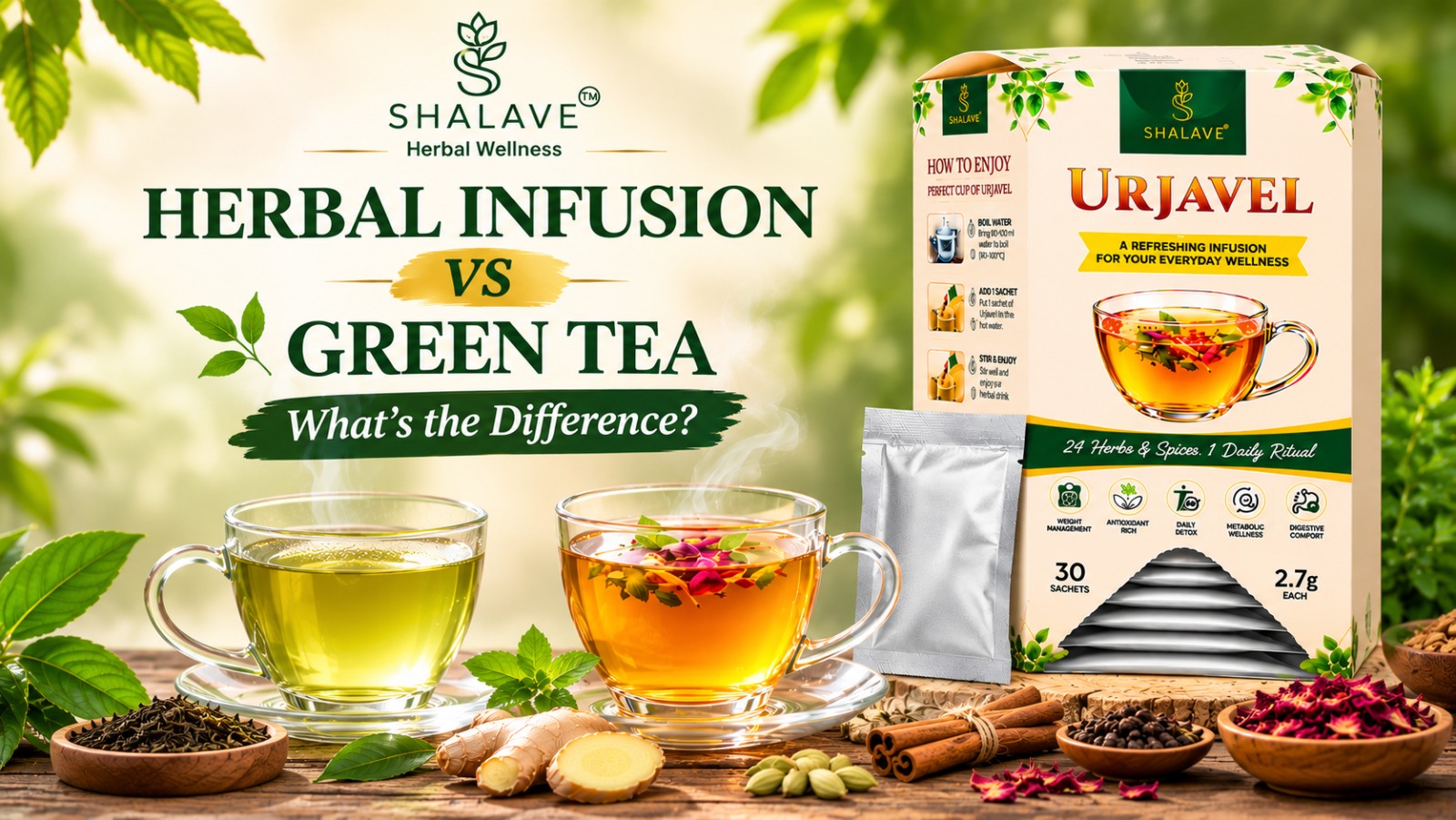
Understanding the ingredients, preparation, flavour, and experience of two popular beverages
Tea is one of the most popular beverages around the world. From traditional milk tea to green tea and different herbal blends, people have plenty of choices when it comes to their daily drinks.
But have you ever wondered whether herbal infusion and green tea are actually the same?
They may look similar when served in a cup, but they are different in terms of ingredients, preparation, flavour, and composition.
Green tea comes from the leaves of the tea plant, while herbal infusions can be prepared using a variety of herbs, spices, flowers, leaves, and other botanical ingredients.
If you are exploring different beverage options, understanding this difference can help you make a more informed choice.
Let’s compare herbal infusion and green tea and discover where URJAVEL Herbal Infusion by SHALAVE fits into the picture.
1. What Is Green Tea?
Green tea is made from the leaves of a plant called Camellia sinensis. The leaves are processed in a way that limits oxidation, helping retain their characteristic colour and flavour.
Unlike black tea, green tea generally undergoes less oxidation during processing.
Green tea is known for its distinctive taste, which can range from mild and grassy to slightly bitter or earthy depending on the variety and preparation method.
Some important characteristics of green tea include:
- It comes from the tea plant.
- It naturally contains caffeine.
- It contains plant compounds called catechins.
- Its flavour varies depending on the variety and preparation.
- It is commonly prepared by steeping green tea leaves or tea bags in hot water.
Green tea is available in loose-leaf form, tea bags, and other packaged formats.
2. What Is Herbal Infusion?
Herbal infusion is a beverage prepared by infusing herbs, spices, flowers, leaves, or other botanical ingredients in water.
Unlike green tea, herbal infusions do not necessarily contain leaves from the tea plant.
Depending on the ingredients, a herbal infusion may have a floral, spicy, earthy, mild, or refreshing flavour.
Some commonly known ingredients used in herbal infusions include:
- Mint
- Ginger
- Cinnamon
- Chamomile
- Hibiscus
- Lemongrass
- Cardamom
These are general examples of ingredients used in different herbal beverages. They are not a confirmed ingredient list for every herbal infusion or for URJAVEL.
A herbal infusion’s composition depends entirely on the specific blend.
3. Herbal Infusion vs Green Tea: Key Differences
Although both beverages can be prepared using hot water, they are not the same.
Here is a simple comparison:
| Feature | Green Tea | Herbal Infusion |
|---|---|---|
| Main source | Leaves of Camellia sinensis | Herbs, spices, flowers, leaves, and other botanicals |
| Caffeine | Naturally contains caffeine | Depends on the ingredients; many traditional herbal infusions are caffeine-free |
| Flavour | Grassy, earthy, mild, or slightly bitter | Can be floral, spicy, earthy, or refreshing |
| Ingredients | Green tea leaves | Varies according to the blend |
| Preparation | Usually steeped in hot water | Depends on the ingredients and product instructions |
| Variety | Different green tea varieties | Many combinations of botanical ingredients |
The most important distinction is the source of the ingredients.
Green tea is a type of tea made from the tea plant. Herbal infusion is a broader category of beverages made using various botanical ingredients.
4. Does Herbal Infusion Contain Caffeine?
This is one of the most common questions.
Green tea naturally contains caffeine because it is made from the tea plant.
Herbal infusions are different. Their caffeine content depends on the ingredients used.
Many traditional herbal infusions made exclusively from herbs, flowers, or spices are naturally caffeine-free. However, some blended products may contain tea leaves or other caffeine-containing ingredients.
Therefore, you should never assume that every product labelled herbal infusion is caffeine-free.
Always check the ingredient list and product information before purchasing, especially if you are sensitive to caffeine or need to limit your intake.
For URJAVEL, refer to the actual product packaging for its ingredient and product information.
5. How Are Their Flavours Different?
Flavour is another major difference between green tea and herbal infusion.
Green tea flavour
Green tea generally has a characteristic flavour that can be:
- Grassy
- Earthy
- Mild
- Slightly bitter
- Vegetal
Its taste can change depending on the variety, water temperature, and steeping time.
Herbal infusion flavour
Herbal infusions can offer a much wider range of flavour experiences because they use different botanical ingredients.
Depending on the blend, the flavour may be:
- Floral
- Spicy
- Aromatic
- Earthy
- Minty
- Mild or intense
For example, a mint-based infusion will taste different from a cinnamon-based blend.
This variety makes herbal infusions interesting for people who enjoy exploring different beverage flavours.
6. How Are Green Tea and Herbal Infusion Prepared?
Both beverages can be prepared using hot water, but the preparation method can differ.
Preparing green tea
A general green tea preparation method includes:
- Heat water according to the tea instructions.
- Add green tea leaves or a tea bag.
- Allow it to steep for the recommended time.
- Remove the leaves or tea bag.
- Serve and enjoy.
Water that is too hot or steeping for too long may produce a more bitter flavour.
Always follow the instructions provided with your green tea product.
Preparing herbal infusion
The preparation method depends on the ingredients and format.
A general approach may include:
- Read the preparation instructions.
- Heat the recommended quantity of water.
- Add the herbal ingredients or sachet as directed.
- Allow the ingredients to infuse according to the specified time.
- Serve as instructed.
For packaged herbal blends, always follow the manufacturer’s preparation directions rather than assuming that all products require the same method.
7. Which One Should You Choose?
There is no universal answer. The right choice depends on your taste preferences, ingredient requirements, and daily beverage habits.
You may prefer green tea if:
- You enjoy the characteristic flavour of green tea.
- You want a beverage made from tea leaves.
- You are comfortable with its naturally occurring caffeine.
- You enjoy exploring different green tea varieties.
You may prefer herbal infusion if:
- You enjoy exploring different botanical flavours.
- You prefer blends made with herbs and spices.
- You want variety beyond conventional tea.
- You are interested in trying different herbal beverage combinations.
Neither beverage is automatically better for everyone.
The important thing is to understand what you are drinking and choose according to your preferences and individual needs.
8. Discover URJAVEL: A Different Herbal Infusion Experience
If you are curious about herbal infusions, discover URJAVEL Herbal Infusion by SHALAVE.
URJAVEL is a blend featuring 24 herbs and spices, presented in convenient individual sachets.
It is designed for people who want to explore a multi-ingredient herbal beverage as part of their everyday beverage routine.
What makes URJAVEL convenient?
24 herbs and spices
A blend featuring multiple botanical ingredients.
30 sachets per pack
Individual portions make storage and preparation convenient.
2.7 g per sachet
Each sachet contains a clearly portioned quantity of the blend.
Convenient format
Suitable for people who prefer individual sachets rather than measuring a loose blend.
URJAVEL is a herbal infusion, not green tea. For the complete ingredient declaration and preparation directions, refer to the actual product packaging.
9. Can You Enjoy Green Tea and Herbal Infusion in the Same Routine?
Yes, your beverage choices do not have to be limited to just one option.
Some people enjoy green tea on certain days and herbal infusions on other occasions. Others prefer coffee, regular tea, or plain water.
You can choose different beverages according to your taste and routine.
A few things to keep in mind:
- Be aware of your overall caffeine intake.
- Check the ingredients of blended beverages.
- Follow the recommended serving instructions.
- Avoid ingredients that you know are unsuitable for you.
- Maintain adequate water intake throughout the day.
If you have a health condition, take medication, or are pregnant or breastfeeding, check with a qualified healthcare professional before introducing unfamiliar herbal blends into your routine.
10. What Should You Check Before Buying a Herbal Infusion?
Before choosing a herbal beverage, take a moment to read the product information.
Here are some useful points:
Ingredient declaration: Check which ingredients are actually included.
Caffeine information: Verify whether the product contains caffeine if this matters to you.
Serving size: Understand the recommended quantity for each serving.
Preparation instructions: Check the correct water quantity and preparation method.
Packaging details: Look for net quantity, storage information, and shelf-life details.
Brand information: Check the brand and relevant customer contact details.
Product suitability: Consider allergies, sensitivities, medication, and individual requirements.
A well-informed purchase starts with understanding the product rather than relying only on marketing claims.
Frequently Asked Questions
1. Is herbal infusion the same as green tea?
No. Green tea is made from the leaves of Camellia sinensis. Herbal infusions are prepared using herbs, spices, flowers, leaves, and other botanical ingredients.
2. Does green tea contain caffeine?
Yes. Green tea naturally contains caffeine, although the amount varies depending on the variety and preparation.
3. Are all herbal infusions caffeine-free?
No. Many traditional herbal infusions made exclusively from herbs and spices are caffeine-free, but blended products may contain caffeine-containing ingredients. Always check the ingredient list.
4. Which tastes better: green tea or herbal infusion?
Taste is personal. Green tea has a characteristic grassy or earthy flavour, while herbal infusions can offer a wide range of floral, spicy, aromatic, and earthy flavours.
5. Is URJAVEL green tea?
No. URJAVEL by SHALAVE is a herbal infusion featuring a blend of 24 herbs and spices.
6. How many sachets are in one URJAVEL pack?
One pack contains 30 sachets, with each sachet weighing 2.7 g.
7. Can I drink herbal infusion every day?
Follow the product’s recommended serving instructions and check the ingredients for suitability. If you have specific health concerns or take medication, consult a qualified healthcare professional.
8. Where can I find URJAVEL Herbal Infusion?
You can explore URJAVEL through the official SHALAVE website at www.shalave.in or contact the team on WhatsApp at +91 96233 17177.
Final Thoughts
Green tea and herbal infusion may look similar in a cup, but they are different beverages with different ingredient sources and flavour profiles.
Green tea comes from the tea plant, while herbal infusions offer a wider range of botanical combinations.
If you enjoy exploring different beverage experiences, herbal infusion is another option worth discovering.
With a blend of 24 herbs and spices, 30 individual sachets, and 2.7 g per sachet, URJAVEL Herbal Infusion by SHALAVE brings convenience and variety together.
Explore beyond your regular cup. Discover URJAVEL.
Website: www.shalave.in
WhatsApp: +91 96233 17177
Instagram: @shalaveindia
The Power of Our District PR Ecosystem
We are not just a media agency—we are building an entire district-level digital infrastructure with:
Each site provides:
- SEO blog space
- Video PR hosting
- Local business features
- Event coverage
- News updates